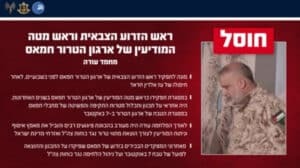
Hamas rejects disarmament clause of Gaza peace plan, IDF reports 14 ceasefire violations April 8–16

Kinetic events and military actions continue in Gaza, including 14 violations of the fragile ceasefire by Palestinian terrorists, according to the Israeli military. The Israel Defense Forces has documented an uptick in planned attacks against Israeli soldiers in the enclave. Read more →

Syrian president meets Syrian Democratic Forces leader to discuss next phase of integration

On April 16, Syrian President Ahmad al Sharaa met with Syrian Democratic Forces (SDF) commander Mazloum Abdi in Damascus to discuss advancing the integration of the SDF into state institutions, following a January agreement. The talks come amid shifting control in eastern Syria, including government moves to secure key bases and border crossings after a US withdrawal. Read more →

Generation Jihad | Battle for the Strait

FDD Senior Fellow Edmund Fitton-Brown joins Bill Roggio to assess the current state of the Iran War. From the dual blockade in the Strait of Hormuz to the failed peace negotiations, they consider: Why did Pakistan step up as mediator? Can Tehran stretch the Houthis for even more leverage in the Red Sea? Has the war pushed the Gulf States closer together? Read more →

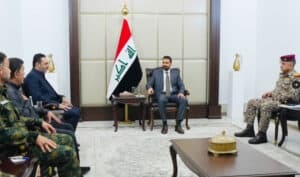
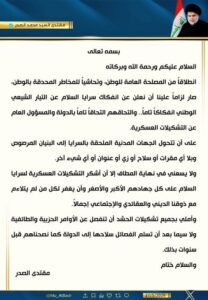
Iraq focuses on political appointees, economic challenges amid Iran ceasefire

Baghdad is shifting toward political stabilization and economic challenges during the fragile post-conflict phase that follows more than a month of US-Israeli strikes on Iran and Iranian-backed militia attacks in Iraq. After hundreds of militia attacks, including strikes on US and Kurdish targets, Iraq is moving forward with long-delayed political appointments, including choosing a new president. Read more →

Iraqi fundraising drives linked to militias channel support to Iran and Hezbollah

Efforts described by Iran-backed Iraqi militias as humanitarian campaigns increasingly show signs of serving as a parallel financial pipeline that also fuels Iran’s current war effort and regional proxy network. Across Iraq, groups aligned with Tehran are mobilizing donation drives framed as a religious obligation and in wartime solidarity. Read more →

A breakdown of Israel’s heavy bombardment of Beirut on April 8

On April 8, Israel launched its most intense aerial blitz in Lebanon since the war with Hezbollah restarted. The strikes were particularly deadly in Beirut, where the Israeli military struck targets both in the suburb of Dahiyeh and, in a rare occurrence, the heart of the Lebanese capital. Israel alleges that Hezbollah operatives had moved northward out of the group’s Dahiyeh nerve center into the city. Read more →

Analysis: How to assess America’s 40 days of war against Iran

US and Israeli forces conducted an impressive campaign that significantly degraded Iran’s primary elements of military power. The operation did not, however, destroy these capabilities outright or eliminate Iran’s ability to project meaningful power outside of its borders. Read more →

Syria focuses on diplomacy amid Iran war

Syria has sought to position itself as a diplomatic actor amid the regional conflict with Iran, maintaining relative stability while several neighboring states faced significant missile and drone attacks. Damascus has intensified high-level engagements with Turkey, the United States, and Ukraine, highlighting efforts to rebuild international ties following the fall of the Bashar al Assad regime. Read more →

Despite ceasefire, Iran and its militias continue attacking regional states (April 2–8 updates)

Iran and its allied militias launched numerous drones and missiles against regional countries between April 2 and April 8, continuing attacks after a ceasefire between Iran and the United States was announced yesterday. Across this period, the attacks remained concentrated on the Gulf, Jordan, Iraq, and Iraqi Kurdistan, with repeated mass-interception events in the United Arab Emirates, Kuwait, Bahrain, Saudi Arabia, and Qatar. Read more →

US, Iran agree to 2-week ceasefire in exchange for reopening of Strait of Hormuz

There are conflicting conditions demanded by the US and Iran for lasting peace, and Israeli and Iranian strikes continued after the ceasefire announcement. However, a cessation of hostilities and reopening of the Strait of Hormuz to international shipping appear to be agreed-upon items. Iranian leaders touted the ceasefire as a victory, while US officials said the objectives of destroying Iran’s military and nuclear capabilities were achieved. Read more →

Gunmen fire at police outside of Israeli consulate in Istanbul

Three attackers opened fire on police officers outside the Israeli consulate in Istanbul, Turkey earlier today. Turkish police killed one shooter and captured two others. The affiliation of the attackers is currently unknown, but the incident comes almost a week after the Islamic State called for attacks on Jews during the Passover holiday. Read more →

Iranian ballistic missile cluster munitions strike dozens of sites in Israeli cities

Iran’s increasing use of cluster munitions in ballistic missile attacks since late February has intensified damage across Israel, with dozens of impact sites reported in major cities in the first week of April. Four people were killed in Haifa in a missile attack on April 6. Meanwhile, Israel is escalating strikes on Iranian infrastructure targets and boosting production of Arrow interceptors as part of its multi-layered air defense. Read more →

Iran rejects US ceasefire proposal as US-Israeli operations escalate, regime suffers high-profile casualties

US and Israeli operations inside Iran escalated over the past week. Actions included strikes on Islamic Revolutionary Guard Corps missile and air defense sites, eliminations of senior military and intelligence officials, the recovery of a US F-15E crew downed over Iran, and attacks on Iranian infrastructure, ranging from petrochemical facilities to major industrial plants. Read more →

More Posts